
99.999% availability and 1.0 PUE is achievable
Engineering mechanical reliability for the world's most demanding data center environments
At hyperscale, availability and PUE (power usage effectiveness) must scale together. SKF engineers reliability into the mechanical systems that define cooling and power performance, where uptime is truly won or lost.
Data centers operate at the edge of mechanical limits
Data centers are pushing the boundaries of performance, power density, and availability. But as power and cooling demands surge, so does the risk hidden inside your most critical rotating assets: pumps, fans, compressors, and chillers.
We are SKF, the global leader in bearing technology, but our value extends beyond our products and solutions.
We are working with data center operators to maximize critical support system efficiency and move closer to 99.999% availability without defaulting to additional redundancy.

Growth in compute workload has significantly outpaced efficiency gains,
increasing total hyperscale power demand.
POWER DENSITY AND MECHANICAL STRESS
Rising workload density is amplifying mechanical stress
Rack‑level power density has increased dramatically over the last decade. Traditional enterprise environments operated at single‑digit kilowatt levels. Modern hyperscale and AI‑focused deployments now operate at many multiples of those values.
This increase directly drives:
- Higher continuous airflow requirements
- Increased thermal rejection demand
- Elevated rotational speed and load across cooling equipment
Mechanical systems are now operating closer to their physical limits—and doing so continuously.

AI workloads are accelerating rack‑level power density, increasing thermal and mechanical load.
COOLING AND ENERGY IMPACT
Cooling is now one of the largest energy variables
Cooling infrastructure represents the largest non‑IT energy load in hyperscale data centers. With energy use in data centers expected to double by 2030, mechanical losses, friction, and inefficiencies inside cooling systems directly affect total energy consumption and PUE (power usage effectiveness).
As hyperscale facilities grow in size and thermal density, even marginal improvements in mechanical efficiency deliver disproportionate energy and cost impact across entire campuses.
Engineering reliability and efficiency at the mechanical layer is no longer optional, it is central to operational performance.

Cooling accounts for a substantial share of hyperscale data‑center energy consumption.
AVAILABILITY REALITY CHECK
FAILURE ORIGINS
Availability and efficiency converge at the mechanical layer
Hyperscale operators design for availability targets aligned with 99.999% uptime while pursuing PUE values approaching 1.0. In practice, these goals remain difficult to achieve at scale.
Despite advances in architecture and monitoring, significant outages still occur, often originating from mechanical performance limits rather than IT systems.
At hyperscale, availability and efficiency no longer compete. They succeed or fail together at the mechanical level.
Most reliability failures do not start with IT
Cooling and power systems rarely fail because of design intent. Failure begins when individual mechanical components cannot sustain real operating conditions.
Critical rotating assets include:
- Fan walls and air‑handling units
- Pumps
- Compressors
- Chillers
- Power‑generation support equipment
In many cases, the bearing defines the reliability limit of the entire system.
SKF DIFFERENTIATION (PROCESS-LED)
SKF engineers reliability where hyperscale risk concentrates

Analyze
SKF performs application‑level analysis of critical rotating assets to identify dominant mechanical failure modes under continuous duty.

Model
We apply life and reliability models aligned with actual operating conditions, not nominal specifications.

Engineer
Advanced bearing technologies and machine‑health insights are deployed at validated duty points to improve reliability and efficiency simultaneously.
This engineering‑first approach enables hyperscale operators to progress toward higher availability without defaulting to additional redundancy.
Are your mechanical systems engineered for hyperscale reliability?
SKF supports data‑center teams in identifying mechanical limits, efficiency losses, and reliability risk across cooling and power support systems.
Request an SKF
Reliability Assessment
An SKF engineering specialist will contact you.
WATCH THE WEBINAR
Turn hyperscale constraints into competitive advantages
What this session covers:
- Where mechanical risk concentrates in hyperscale cooling systems
- Why bearings often define reliability limits under extreme duty
- How low‑friction and contact‑free technologies reduce downtime risk
- Using machine‑health data to support predictive reliability strategies
TECHNOLOGIES
Solutions designed for hyperscale operation under real operating conditions

Hybrid Ceramic Bearings
Reduced friction and heat generation. Electrical insulation for VFD‑driven equipment. Stable performance under continuous, high‑speed operation.

Magnetic Bearings
Contact‑free, lubrication‑free operation. Reduced maintenance intervention. High reliability for compressors and chillers at scale.
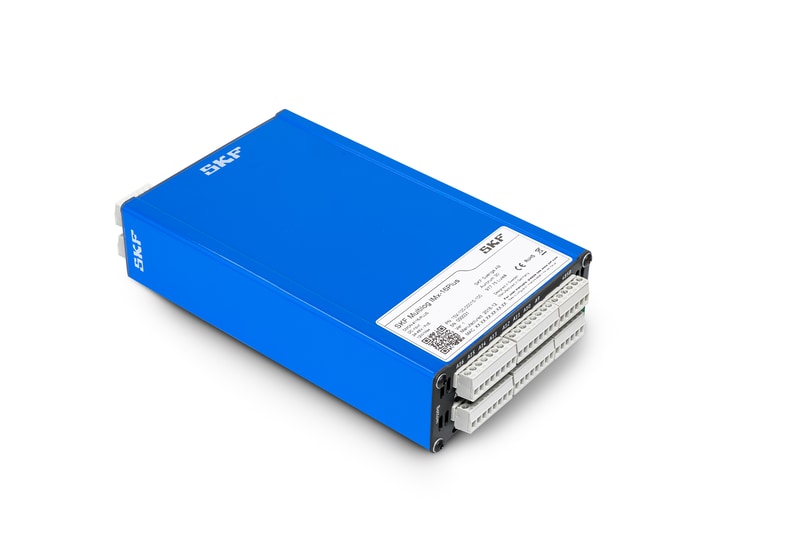
Machine Health & Condition Monitoring
Early detection of mechanical degradation. Predictive maintenance enablement. Fleet‑wide reliability visibility.
CONTACT US
Availability and efficiency do not have to compete
SKF helps hyperscale operators engineer mechanical reliability into the foundation of cooling and power systems—supporting availability targets aligned with 99.999% uptime and energy‑efficiency ambitions approaching PUE 1.0.
Request a Technical Discussion with SKF

